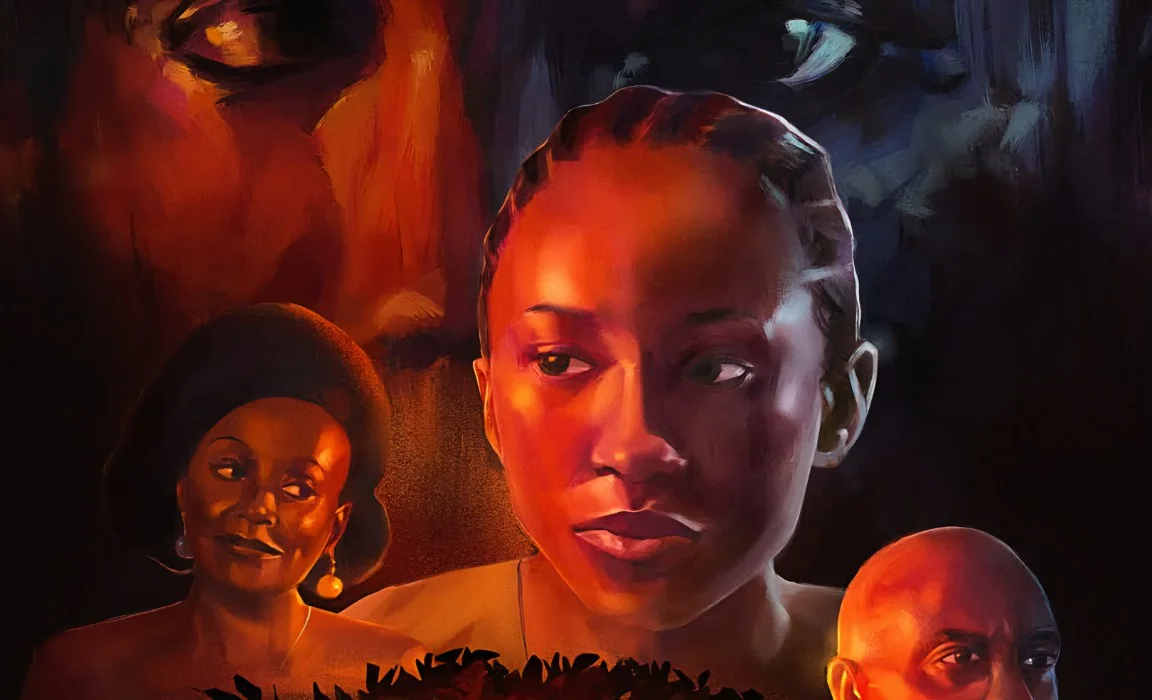
Film Synopsis 🌳🥀
What begins as one student's desperate attempt to secure her future becomes a nightmare that threatens an entire community.
Amara is an ambitious student whose conditional admission to Harvard depends on passing French. Unwilling to risk failure, she turns to Ms. Kanyin for help. But when her teacher refuses to compromise her integrity by providing access to the examination paper, Amara devises a plan to steal it.
Drawing in her schoolmates, including Finidite and Chisom, the plan sets in motion a series of events none of them could have anticipated.
A frightening encounter involving Ms. Kanyin, a dog and an ancient tree awakens something buried in the community's ancestral past.
As mysterious deaths and unexplained tragedies begin to unfold, the students discover that the Tree of Life holds a disturbing history. Generations earlier, the community's ancestors had used the tree against their enemies, leaving behind a supernatural danger that would eventually threaten people who knew nothing of its origins.
Now, with fear spreading, friendships tested and guilt weighing heavily on those involved, the students must confront not only the forces they have awakened but also the consequences of their own decisions.
And as they search for a way to end the nightmare, one question remains: can the mistakes of the past truly be undone, or do their consequences simply find new generations to bear them? 🥀
Finidite
When Teenage Pride Turns Into Resentment
Finidite was a teenager whose behaviour often reflected self-centredness and a troubling disregard for the consequences of his actions. Yet what I found particularly interesting about his character was how difficult it was to pinpoint exactly where his resentment towards Ms. Kanyin began.
Was it the uncomfortable incident on visiting day, when he witnessed his father touching Ms. Kanyin inappropriately? Or was it the humiliation he experienced in the dining hall, when Ms. Kanyin slapped him in front of the other students?
Perhaps it was a combination of both. A teenager whose pride had been wounded, who struggled to understand his own emotions, and whose resentment gradually mattered more to him than the consequences of his decisions.
Whatever the reason, his decision to join the mission to steal the French examination paper seemed to be driven by more than academic desperation. For Finidite, it had become an opportunity to get back at Ms. Kanyin.
And when they failed to find what they were looking for, his resentment took an even uglier turn. He deliberately wet Ms. Kanyin's bed and left a mess behind, an act that revealed just how personal his hostility towards her had become.
But perhaps the most devastating consequence of his behaviour came on the night of the break-in.
When Finidite released the dog while facing Ms. Kanyin, I couldn't help wondering whether he knew exactly how frightened she was of dogs. His actions certainly suggested that frightening her was intentional, even if he could never have imagined what would happen next.
As Ms. Kanyin fled, she fell onto the Tree of Life, and her blood came into contact with something that had remained undisturbed for generations.
What began as an act of teenage resentment became the turning point from which every tragedy that followed would unfold.
And that, to me, is what makes Finidite's character so unsettling. He may never have intended the devastation that followed, but his intentions did not erase the consequences of his actions.
Sometimes, the most devastating consequences begin in moments when our pride matters more to us than our judgment. 🥀
Chisom
When Courage Comes at a Cost
Chisom was easily my favourite character in Ms. Kanyin. Bright, observant and composed, she possessed a maturity that set her apart from many of her peers.
As the principal's daughter, she was respectful towards her father, teachers and other elders, but that respect never stopped her from speaking her mind. Among her peers in particular, she wasn't afraid to call out behaviour she believed was wrong, even when it made others uncomfortable.
Her perceptiveness was evident from the beginning. She understood what Amara was planning before Amara even said it aloud. And before agreeing to help with the mission to steal the French examination paper, she demanded that Finidite apologise for an earlier incident in which he had placed a used condom on her desk.
It was a small but revealing moment. Even when she was willing to cooperate, she wasn't prepared to overlook the disrespect she had experienced.
Chisom's role in the mission was mainly to provide access to Ms. Kanyin's house. She arrived with her dog, Petra, handed the keys to Amara and her friends, and later returned to find out whether their plan had succeeded.
Unfortunately, things had taken an unexpected turn. Ms. Kanyin's date with Mr. Mustafa had been cut short by a car breakdown, and she returned home earlier than anyone anticipated. The students panicked and escaped without being discovered, but Amara was left trapped inside the house.
When Chisom learned what had happened, she immediately challenged Finidite's selfishness. He wanted to leave Amara behind, but Chisom wasn't willing to abandon someone simply because helping her had become inconvenient.
Yet, looking back, I couldn't help wondering whether leaving Amara behind might actually have been the safer choice. Amara would certainly have faced consequences for her actions, but perhaps the terrible events that followed could have been avoided.
Instead, Chisom chose to help. Knowing where Ms. Kanyin kept the spare key, she took it upon herself to get Amara out.
Perhaps her one significant mistake was entrusting Petra to Finidite while she went to rescue Amara. She couldn't have anticipated that he would release the dog, setting in motion the events that would awaken the forces connected to the Tree of Life.
But Chisom's courage didn't end there.
As the tragedies continued, she refused to remain passive. Determined to understand what was happening, she secretly climbed into the back of Mr. Mustafa's truck, risking her own safety to find answers about the mysterious tree.
And when her father refused to listen to what she had discovered, she didn't let his dismissal silence her. She took the initiative to confront the danger and help destroy the Tree of Life.
But the final confrontation came at a heartbreaking cost.
Her father eventually joined the fight against Ms. Kanyin's ghost. Believing he had destroyed her, he lowered his guard, unaware that the danger was far from over. Ms. Kanyin attacked again, and this time, he lost his life.
There is something particularly painful about that ending. Chisom had tried so hard to make her father understand the danger, only for him to become one of its victims.
And that, to me, is what makes Chisom's journey so moving.
She was intelligent enough to recognise danger, courageous enough to confront it and compassionate enough to refuse to abandon others. Yet, despite all those admirable qualities, she couldn't protect the people she loved from every consequence.
Sometimes, doing what we believe is right demands a courage we never imagined needing, and even then, the outcome may come at a cost we were never prepared to pay. 🥀
Amara
When Ambition Becomes the Fear of Failure
Amara was an ambitious and determined student, but she was also someone who struggled to accept the possibility of failure. Perhaps it was the pressure of her parents' expectations, or perhaps she had placed so much importance on succeeding that anything less had become difficult for her to imagine.
Whatever the reason, her determination to succeed gradually became her greatest weakness.
After receiving a conditional admission letter from Harvard that required her to pass French, Amara found herself facing an obstacle she wasn't prepared to leave to chance.
She approached Ms. Kanyin, who had promised to help her succeed, and demanded access to the WAEC French examination paper so she could familiarise herself with the questions before sitting the examination.
But Ms. Kanyin refused.
And when pleading and accusations failed to change her teacher's mind, Amara decided to take matters into her own hands.
She devised a plan to steal the examination paper, drawing her friends into a mission whose consequences none of them could have anticipated.
To me, this was where Amara's ambition crossed a dangerous line. There is nothing wrong with wanting to succeed, but when the fear of failure becomes so overwhelming that we are willing to compromise our integrity, we risk losing sight of what success should actually mean.
And Amara seemed prepared to go to almost any length to secure the result she wanted.
But as the tragedies unfolded and her friends began losing their lives, something in her gradually changed.
I don't think Amara's transformation began simply because she suddenly recognised that cheating was wrong. Rather, it was the guilt and fear that followed the deaths of her friends that forced her to confront the consequences of her actions.
The examination paper she had been so desperate to obtain was no longer a symbol of the success she wanted. It had become a painful reminder of the decisions that had contributed to everything going wrong.
Following Lami's death, Amara burned the stolen French paper, which she had found that night.
It was a significant moment, not necessarily because she had completely overcome her fear of failure, but because the cost of pursuing success through dishonesty had become far greater than anything she had imagined.
Unfortunately, that realisation came too late to undo the damage already done.
Rather than remaining silent, Amara began searching for answers. After receiving Chisom's note about the Tree of Life, she went to the library, where she discovered information that helped her understand the mystery surrounding it.
And when the time came to confront the danger, she found the courage to help destroy the Tree of Life.
What makes Amara's journey particularly meaningful to me, however, is how her story eventually returned to where it had all begun: her French examination.
The same student who had once been willing to steal an examination paper ultimately sat the examination honestly, prepared to accept whatever result came her way.
And perhaps even more touching was her apology to Ms. Kanyin, delivered in French, the very subject that had caused so much conflict between them.
There is something deeply symbolic about that moment. The language she once feared failing became the language through which she expressed her remorse.
Amara couldn't undo the past, and her change of heart couldn't bring back the lives that had been lost. But she could choose how to move forward.
Sometimes, it takes consequences far greater than the failure we once feared to make us realise that success was never worth losing ourselves over. 🥀
The Tree of Life
When the Past Becomes the Burden of the Present
The ancestral story of the Tree of Life was one of the most intriguing aspects of Ms. Kanyin for me.
What surprised me most was the ancestors' decision to use the Tree of Life against their enemies, seemingly without considering that generations yet to be born might one day suffer the consequences of their actions.
Perhaps, at the time, they believed they were doing what was necessary to protect themselves. Perhaps they saw no better alternative. But what they considered a solution to the problems of their generation eventually became a burden for people who had nothing to do with those decisions.
And that, to me, raises an uncomfortable question: How often do we make decisions based on what benefits us today without considering what they might cost those who come after us?
As the consequences began to unfold, it wasn't only those directly involved in awakening the forces connected to the tree who suffered.
The villagers watched their crops fail and their animals die, dogs in particular, while innocent people found themselves paying for mistakes they had never made.
There is something deeply unsettling about that.
The ancestors made their choices, but it was the living who inherited the consequences. People who had no knowledge of what had happened generations earlier suddenly found themselves facing a danger they neither created nor understood.
It also made me question why a place carrying such a dangerous ancestral history remained so easily accessible.
According to Baba, by the time the elders realised the tree needed to be destroyed, the land had already been sold. What was once sacred ground became part of a school, and the knowledge of its danger faded with time.
Even if the elders could no longer destroy the tree, couldn't more have been done to preserve the knowledge of its danger and protect future generations from unknowingly disturbing it?
Perhaps the greatest mistake wasn't simply what the ancestors had done, but that those who came after them were left without the knowledge to protect themselves from its consequences.
And then there was the ending.
When the Tree of Life was finally burned, Ms. Kanyin's ghostly appearance disappeared. Yet, shortly afterwards, she was lying on the ground in Mr. Mustafa's arms, quietly telling him, "Mustie, I had a bad dream."
That moment left me wondering whether Ms. Kanyin had actually died or whether the destruction of the tree had somehow freed her from the supernatural forces that had taken hold of her.
Had she been brought back to life? Or had she never truly died in the first place? 👀
And just when it seemed the mystery might finally have been resolved, a red flower emerged from the burnt stump of the Tree of Life.
Was it a symbol of hope, suggesting that something new could grow from the destruction of the past? Or was it a warning that the consequences of those ancestral decisions might not have ended after all?
Perhaps that is what makes the Tree of Life such a fascinating part of the story. It represents more than a supernatural mystery. It raises questions about responsibility, inherited consequences and the dangers of believing that the decisions we make today will end with us.
Sometimes, the people who make the decisions are not the ones who live long enough to face their consequences. And unfortunately, those who inherit the burden may have had no say in creating it. 🥀
Faces of Ms. Kanyin
Meet the faces behind the story. Tap any portrait to view the original poster.
My Verdict 🥀
What I found particularly compelling about Ms. Kanyin was how it brought together ambition, teenage pride, courage, guilt and the consequences of decisions made long before the present generation existed.
Finidite's resentment demonstrated how wounded pride can push someone towards actions whose consequences extend far beyond their intentions.
Chisom, my favourite character, represented something different. Her intelligence, composure, compassion and courage made her stand out, even though doing what she believed was right ultimately came at a heartbreaking personal cost.
And Amara's journey reminded me that ambition, however admirable, can become dangerous when the fear of failure begins to outweigh our sense of integrity. Her transformation wasn't immediate or painless. It was shaped by guilt, fear and the devastating loss of her friends.
But beyond these individual journeys, the ancestral story of the Tree of Life left me with perhaps the film's most thought-provoking question:
How much responsibility do we owe to the generations who will inherit the world we leave behind?
The ancestors made decisions they believed were necessary, yet innocent people suffered consequences they neither created nor understood.
And even when the Tree of Life was finally destroyed, the film left me wondering whether the danger had truly ended. Ms. Kanyin's mysterious return and the red flower emerging from the burnt stump offered no simple answers. Perhaps that uncertainty was part of what made the ending so memorable, even if it also left me wanting more clarity.
If anything held it back from a full five stars for me, it was the ending. Ms. Kanyin's fate was left unclear, and I couldn't quite tell whether she had truly died or somehow returned to life. I also found the title slightly surprising. Although the film is named after the teacher, the story is really driven by the students and the consequences of their actions. But perhaps that's just my thinking.
For me, Ms. Kanyin was more than a supernatural story. It was a reflection on the choices we make, the consequences we cannot always control and the burdens that sometimes outlive those who created them.
Because sometimes, the greatest tragedy isn't simply the mistake itself, but how far its consequences travel beyond the person who made it. 🥀
Official Trailer 🎬
Watch the official trailer for Ms. Kanyin.
Watch on IMDb ↗