
Film Synopsis
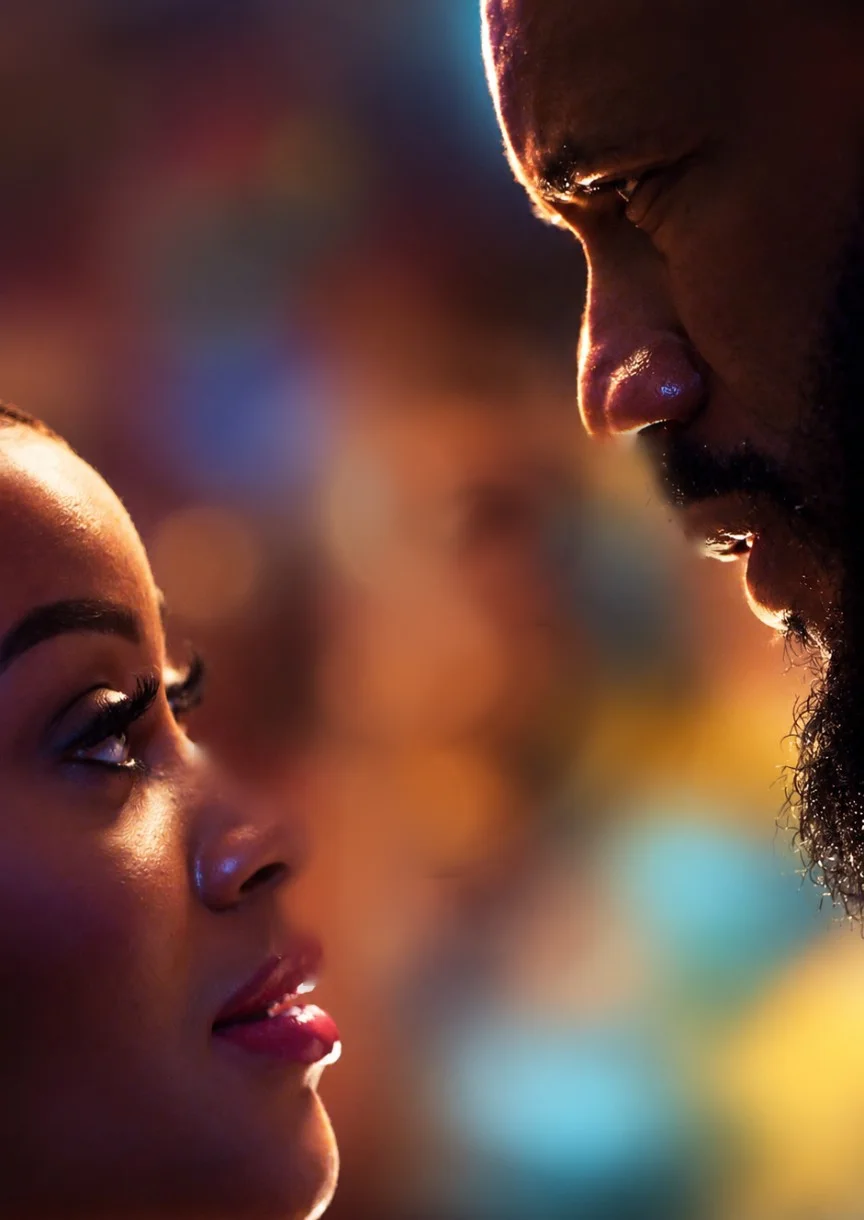
Years after navigating the pressures of love, marriage, and societal expectations in Before 30, four friends return to discover that life beyond thirty presents an entirely different set of challenges.
The friendships remain, but their circumstances have changed. Relationships are tested, personal choices carry unexpected consequences, and the lives they once imagined begin to look very different from the realities they now face.
As they navigate love, marriage, motherhood, and the expectations of those around them, one question quietly emerges: What happens when the life you've been working towards turns out to be more complicated than you anticipated?
Because growing older doesn't necessarily mean having everything figured out. Sometimes, it simply means facing a different set of questions. 🥀
My Thoughts 🥀
What I found particularly interesting about After 30 was how differently the past seemed to influence the lives of these women.
Temi was struggling to let go of a relationship that had become part of her identity. Despite opportunities to experience something new with Akin and Kunle, she kept returning to Ayo, a man whose familiarity seemed to carry more weight than the possibilities of a different future.
Nkem, on the other hand, was trying to move beyond the person everyone believed her to be. Her desire to become a mother raised questions about responsibility, personal growth, and whether someone's past should permanently determine what they're considered capable of becoming.
Then there was Aisha, whose seemingly stable marriage revealed another uncomfortable reality. She loved her husband and had fulfilled many of the expectations placed upon her as a wife, yet when she made a decision about her own reproductive future, the very marriage she had invested in began to unravel.
And perhaps that's what connected their stories for me.
Temi was struggling to let go of her past. Nkem was struggling to escape how others judged hers. And Aisha was struggling to reclaim control over her future.
Three women facing different circumstances, yet each confronting the difficult relationship between personal choices, expectations, and the consequences that follow.
What also stood out was how easily love, friendship, and marriage could become complicated when people's expectations no longer aligned.
Sometimes, the people who care about us genuinely believe they know what's best for us. But where does concern end and judgment begin? And at what point does protecting a relationship become sacrificing too much of ourselves to preserve it?
I think After 30 raises these questions without necessarily offering comfortable answers.
Character Reflections
Three journeys that stayed with me.
Temi
Portrayed by Damilola Adegbite
The woman who couldn't let go of yesterday. 🥀
Sometimes, the hardest person to move on from isn't the one who refuses to leave, but the one we keep allowing back in.
Temi's biggest problem wasn't that she couldn't find love. It was that she couldn't let go of the love she already knew.
After spending so many years with Ayo, the man her friends jokingly called her "mumu button," she had become so emotionally attached to him that moving forward seemed almost impossible.
What I found particularly interesting about Temi was how she confused familiarity with destiny. She had grown so accustomed to loving Ayo that even when something new and potentially beautiful presented itself, she would eventually find her way back to him, convinced that he was her soulmate.
But perhaps that was the real problem. She wasn't necessarily choosing what was best for her. She was choosing what felt familiar.
And there's something rather unfortunate about allowing the memory of a relationship to hold more power over you than the possibilities of a new one.
Because sometimes, what we call a soulmate is simply someone we've never truly learned to live without. 🥀
“Not every love that feels like home is a love worth returning to.” 🥀
Nkem
Portrayed by Beverly Naya
The woman whose past kept speaking louder than her present. 🥀
Sometimes, people become so attached to who we used to be that they struggle to believe we could ever become someone different.
Nkem was never someone who pretended to be anything other than herself. She knew how to enjoy life, embraced her freedom, and wasn't particularly concerned about what others thought of her choices. But while she seemed comfortable with the life she lived, the consequences of those choices occasionally caught up with her.
In Before 30, she found what appeared to be genuine love with Emeka, a man whose values around intimacy and marriage were very different from hers. Unfortunately, their relationship came to an end for a reason she never discovered. Unknown to Nkem, Emeka had learned that his cousin had once slept with her, an encounter the cousin described as one of his most unforgettable one-night stands. Unable to look past that revelation, Emeka chose to walk away, keeping the real reason between himself and Temi. And perhaps what made it even more heartbreaking was that Nkem was left mourning a relationship without ever knowing what had truly ended it.
Then came After 30, and with it, a different desire. Nkem wanted to become a mother.
What I found particularly interesting was how quickly her desire for motherhood became a question of whether she deserved the opportunity in the first place.
She explored different possibilities, from IVF and surrogacy to eventually considering adoption. Yet her friend Aisha, speaking from her own experience as a mother, was deeply concerned about whether Nkem could provide the commitment and stability a child deserves. But what troubled me most was that Aisha didn't stop at expressing her concerns. When Nkem finally decided to adopt, she discovered that Aisha had placed a restriction at the orphanage, preventing her from moving forward with the adoption.
And while I could understand Aisha's concerns, I couldn't help wondering whether she had crossed the line between protecting a child's interests and imposing her personal judgment on someone else's life.
Because there's a difference between questioning someone's readiness for responsibility and deciding, on their behalf, that they should never be given the opportunity.
Perhaps Nkem wasn't ready for motherhood. Perhaps she was. But what struck me was how her past seemed to carry more weight than her willingness to embrace a different future.
Of course, motherhood requires far more than simply wanting a child. It demands responsibility, sacrifice, patience, and consistency. But does someone's unconventional past automatically mean they are incapable of those things?
Perhaps what struck me most was that Nkem seemed to be denied the benefit of the doubt. Her previous choices had become the measure by which her future potential was being judged.
And who knows? Maybe motherhood could have been the very experience that encouraged her to embrace a different kind of responsibility. Not because having a child automatically changes someone, but because people are capable of growing when they genuinely choose to.
There's something unfortunate about being permanently judged by a version of yourself that others refuse to believe you can outgrow. 🥀
“Sometimes, people are so busy judging the life you've lived that they forget you still have a life ahead of you.” 🥀
Aisha
Portrayed by Meg Otanwa
The woman who had everything, until she chose herself. 🥀
Sometimes, the greatest threat to a marriage isn't the absence of love, but the expectations that come with it.
Of the four friends, Aisha seemed to have one of the most stable lives, at least when it came to marriage. She was married to Sheriff, a wealthy man she genuinely loved and respected. She understood the expectations that came with being a wife, particularly within a culture where marriage often extends beyond two individuals to include the expectations of an entire family.
But beneath what appeared to be a comfortable marriage were compromises that would eventually test how much of herself she was willing to sacrifice to keep it together.
In Before 30, what began as a one-time sexual encounter involving another woman during a trip to Brazil gradually became a source of conflict. While Aisha considered it an experience that belonged in the past, Sheriff wanted to make it a regular part of their marriage. When he eventually brought another woman into their home, Aisha made it clear that she was uncomfortable with the arrangement and had no intention of continuing it.
What struck me was how something they had initially experienced together became a disagreement about boundaries. Aisha wasn't necessarily rejecting her husband. She was asserting that agreeing to something once didn't mean agreeing to it forever.
And perhaps that was only the beginning of her struggle to have her boundaries respected.
After experiencing a difficult period following the birth of their daughter, Aisha knew she wasn't ready to have more children. Yet the expectations surrounding her marriage suggested otherwise. There was pressure to expand the family, to produce more children, and to fulfil what was considered her responsibility as a wife.
She eventually travelled abroad and underwent a procedure to prevent future pregnancies without informing Sheriff. It was only after the procedure that she confided in Nkem, making her the only friend who knew about the decision she had already made.
And while I could understand why Aisha wanted control over her reproductive future, I also found myself questioning the secrecy surrounding such a significant decision in her marriage.
Because marriage may involve shared expectations, but it doesn't erase an individual's right to make decisions about their own body. At the same time, keeping such a consequential decision from a partner raises difficult questions about trust and communication.
Unfortunately, when the truth eventually came out, the consequences were devastating.
Sheriff's family wanted him to marry another woman who could bear more children and continue the family name. Suddenly, the marriage Aisha had invested so much in seemed to be measured against her willingness and ability to produce more children.
What made her situation particularly painful was that she wasn't a woman who had refused motherhood altogether. She was already a mother. She simply didn't want to go through another pregnancy.
Yet somehow, that wasn't enough.
Her daughter was taken away, and when Aisha decided to fight for her place in her child's life, she encountered yet another painful and unexpected moment. Upon arriving at what had once been her marital home, she found the door locked from the inside. After waiting for some time, it was Nkem, her own friend and the very person she had trusted with one of her most private secrets, who eventually opened the door.
And perhaps what made that moment particularly unsettling wasn't simply Nkem's presence, but the questions it left unanswered. What was she doing there? And how had things reached a point where Aisha found herself standing outside a home she once called her own, waiting for her friend to let her in?
Sometimes, it's not what we discover that hurts the most, but what we're left wondering about. 🥀
And perhaps that's what makes Aisha's story so complicated. She had spent so much of her marriage trying to fulfil the expectations of being a good wife, only to discover that those expectations could change the moment she stopped agreeing to everything.
There's something deeply troubling about a marriage in which a woman's sacrifices are appreciated only for as long as she continues making them. 🥀
“Sometimes, the price of keeping everyone else happy is losing the freedom to make decisions about your own life.” 🥀
Supporting Characters
My Verdict 🥀
Perhaps one of the greatest misconceptions about growing older is believing that life eventually reaches a stage where everything begins to make sense.
We imagine that finding love will bring emotional security, marriage will provide stability, and achieving certain milestones will finally make us feel fulfilled.
But life rarely follows such a predictable pattern.
What After 30 reminded me is that every stage of life comes with its own uncertainties. Sometimes, the very things we once prayed for become the things that challenge us the most.
And while our past experiences inevitably shape who we become, they shouldn't always determine who we're allowed to be.
Because life after thirty isn't necessarily about having all the answers. Sometimes, it's about finding the courage to question the answers we once believed in. 🥀
“We spend so much of our lives preparing for the future, only to discover that the future comes with questions we never prepared ourselves to answer.” 🥀
Official Trailer 🎬
Watch the official trailer for After 30.
Watch on YouTube ↗Video hosted by YouTube. It loads only when you press play.